Commercial Door Locks: When to Rekey, Repair, or Replace Them
Commercial door locks do more than keep a door closed. They control who can enter, when they can enter, and how confidently you can manage access across a building. For business owners, property managers, facility managers, and landlords, the right decision is not always buying new hardware. In many cases, commercial lock rekeying or a targeted repair solves the problem. In others, commercial lock replacement is the safer long-term move.
This guide breaks down when to rekey, when to repair, and when to replace commercial door locks, with practical examples for Bay Area properties.
Start with the reason the lock is under review
Most lock decisions start with a specific event. An employee leaves. A tenant turns over. A key goes missing. A door starts sticking. The hardware no longer matches how the business operates.
Before choosing a fix, look at four basics:
- Who may still have a key
- Whether the lock works reliably every day
- How old the hardware is
- Whether your current setup still fits your access needs
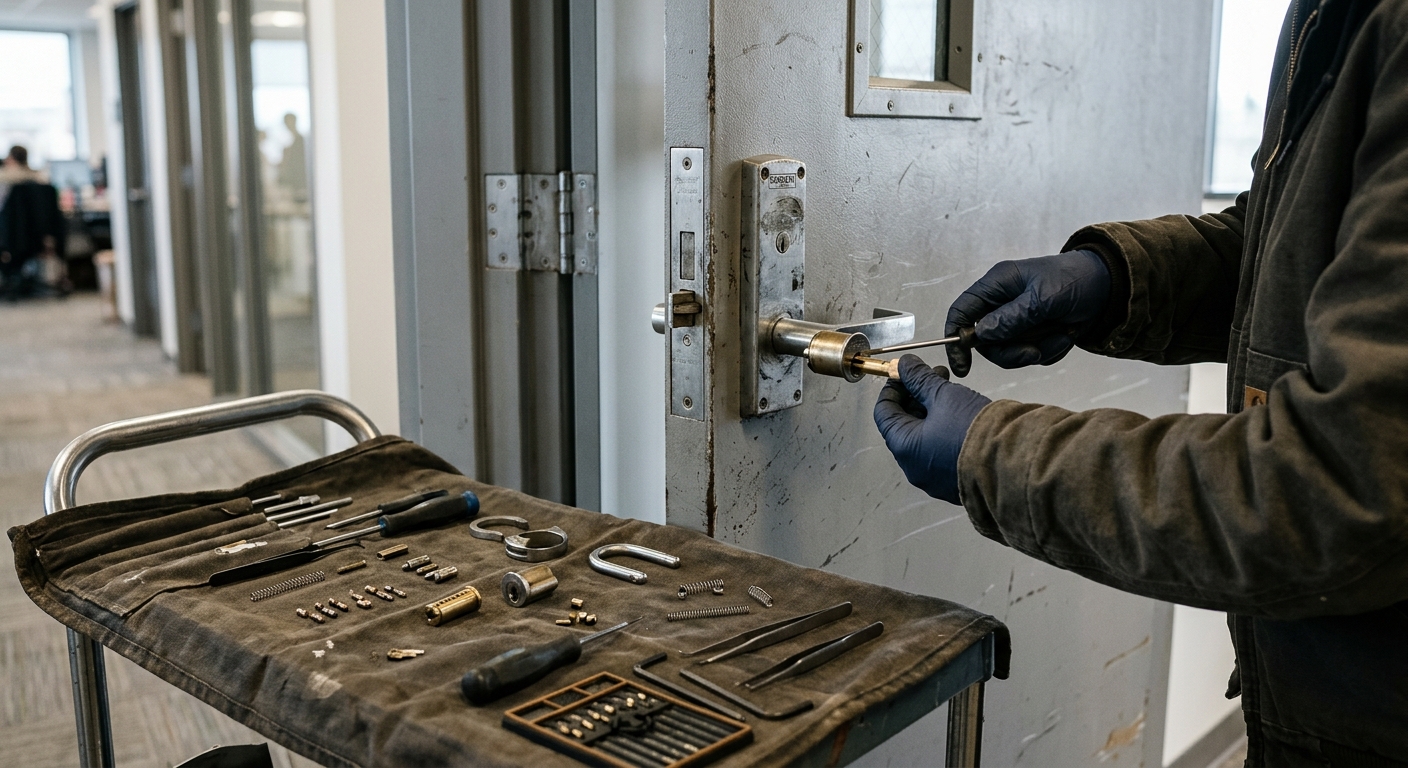
A commercial locksmith can inspect the lock, cylinder, door, frame, and related hardware before recommending the next step. That matters because a lock problem is not always a lock problem. Sometimes the issue is door sag, frame shift, latch misalignment, or worn closers.
When commercial lock rekeying is enough
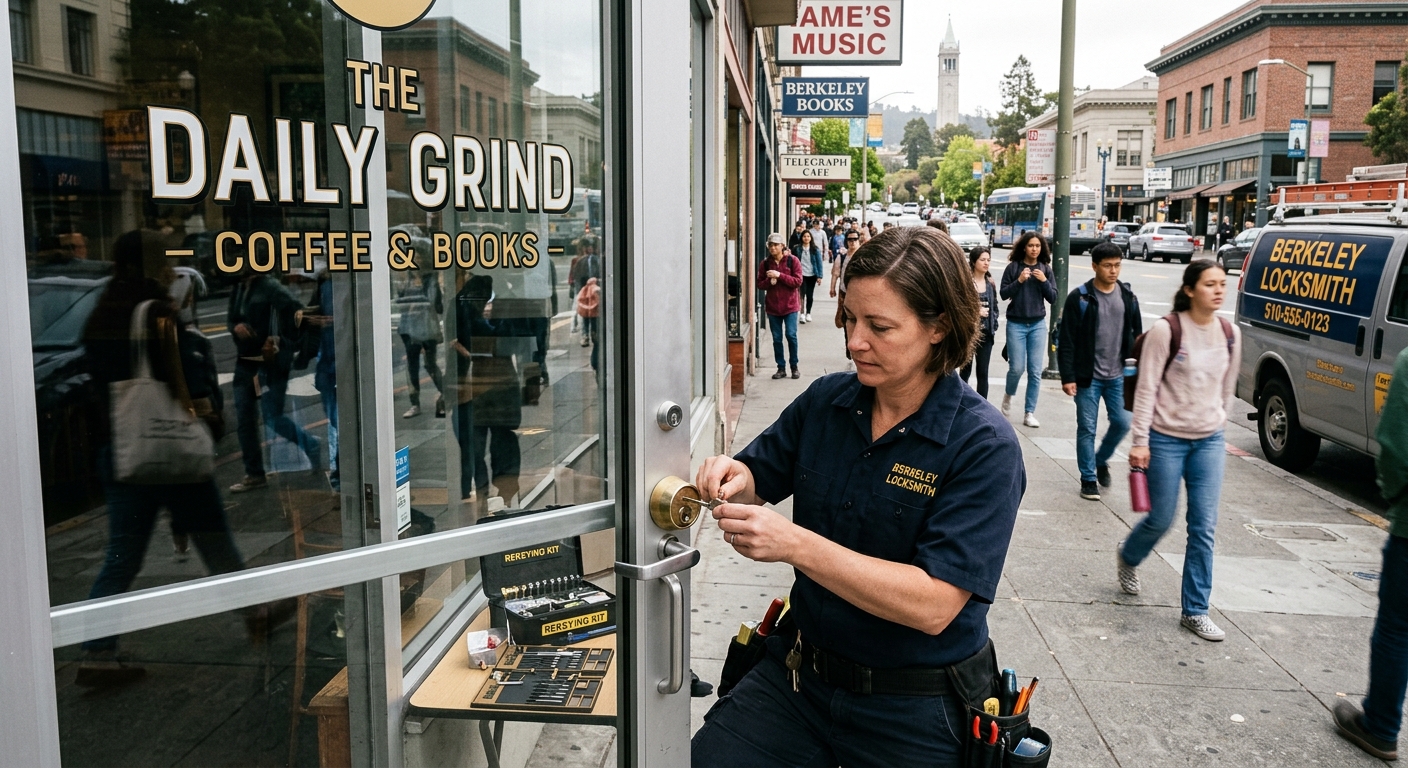
Commercial lock rekeying changes the internal pins of the lock so old keys no longer work, while keeping the existing hardware in place. If the lock is in good shape and the main concern is key control, rekeying is often the most practical option.
Rekeying makes sense when:
- An employee leaves and does not return all keys
- A contractor, vendor, or former staff member may still have access
- A tenant changes in a multi-unit commercial property
- You want one new key to work across selected doors
- The lock hardware still operates smoothly and shows no major wear
A retail business in Walnut Creek may rekey its storefront and back office after manager turnover, even if the locks themselves still work well. In that situation, the priority is stopping old keys from opening the door, not replacing every cylinder and lever.
For businesses with several entry points, rekeying can also be part of a broader key plan. A business locksmith can group doors by access level, which helps reduce key sprawl without replacing every lock on site.
When commercial lock repair makes sense
Commercial lock repair is often the right answer when the hardware is still appropriate for the opening, but one or more components are worn, loose, sticking, or out of alignment.
Repair may be the better choice when:
- The key turns, but not smoothly
- The latch does not retract cleanly
- The lever feels loose or sloppy
- The lock works inconsistently at certain times of day
- The door only locks if it is pulled or pushed a certain way
- The strike, closer, or frame alignment is causing the problem
An office suite in San Ramon might appear to have a failing lock when the real issue is a door that no longer lines up with the strike. In that case, repairing or adjusting the door and related hardware may restore reliable operation without full commercial lock replacement.
Repair is also worth considering when the lock body and trim are still compatible with your doors, fire-rating needs, and traffic demands. Replacing hardware too early can create avoidable cost and extra work if the existing setup can still serve the property well.
Signs commercial lock replacement is the better option
Some locks are too worn, too outdated, or too limited for a repair to make sense. Commercial lock replacement is often the better choice when reliability, security, or compatibility has become a recurring issue.
Replacement should be considered when:
- The lock has repeated failures after prior service
- Internal parts are worn beyond practical repair
- Keys work inconsistently across users
- The hardware is aging and parts are difficult to source
- The door's use has changed and the current lock no longer fits the opening
- You need stronger key control or a different access method
- Existing hardware is damaged from forced entry or abuse
A landlord in Pleasanton managing office or mixed-use commercial space may choose commercial lock replacement after several tenant cycles have left doors with mismatched cylinders, worn levers, and uneven keying. At that point, replacement can simplify maintenance and reset the building's access structure.
Replacement also makes sense when you are upgrading from basic keyed hardware to systems that better match staff size, turnover, or audit needs.
Employee turnover, lost keys, and tenant changes
These are some of the most common reasons to review commercial door locks. If a key is missing, unreturned, copied without authorization, or linked to a former employee or tenant, the core question is simple: can that person still unlock the property?
If the hardware is in good condition, commercial lock rekeying is often enough. If the lock is already unreliable, replacement may be smarter than putting new keying into old hardware.
A property manager in Dublin may need to reset access quickly after a small medical or professional office changes tenants. Rekeying can restore control fast, but only if the lock, door, and frame are still in dependable condition.
For businesses that issue many keys, the review should go beyond one door. Consider who has exterior keys, interior suite keys, storage keys, and after-hours access.
Managing multiple doors and employees
The more doors and users you have, the more access planning matters. A single front door key is one thing. A property with shared entries, back-of-house areas, offices, gates, and storage rooms needs structure.
This is where master key systems can help. A master key system allows different users to carry keys that open only the doors they need, while managers or authorized personnel retain broader access. For a multi-tenant property, school, medical office, warehouse, or professional office, this can reduce the number of keys in circulation and make physical-key access easier to manage.
A commercial locksmith Bay Area businesses trust will usually review:
- Which employees need access to which doors
- Whether exterior and interior keys should be separated
- How turnover is handled
- Whether expansion or tenant changes are expected
- How many cylinders should be keyed alike versus individually
A commercial property in Concord with several suites and shared utility rooms may benefit from a master key system rather than a patchwork of unrelated keys. That can make future rekeying, staff changes, and tenant management more orderly.
When to consider keyless entry or access control
Traditional keyed locks still make sense for many commercial properties. But there are times when a business should consider moving beyond physical keys.
You may want to explore keyless entry for office use or electronic access control when:
- Employee turnover is frequent
- Lost keys keep creating risk and rekeying work
- You want to add, remove, or change access without collecting keys
- Different schedules apply to different teams or vendors
- You need better tracking of who can enter certain areas
- The property has multiple doors that are hard to manage with manual key distribution
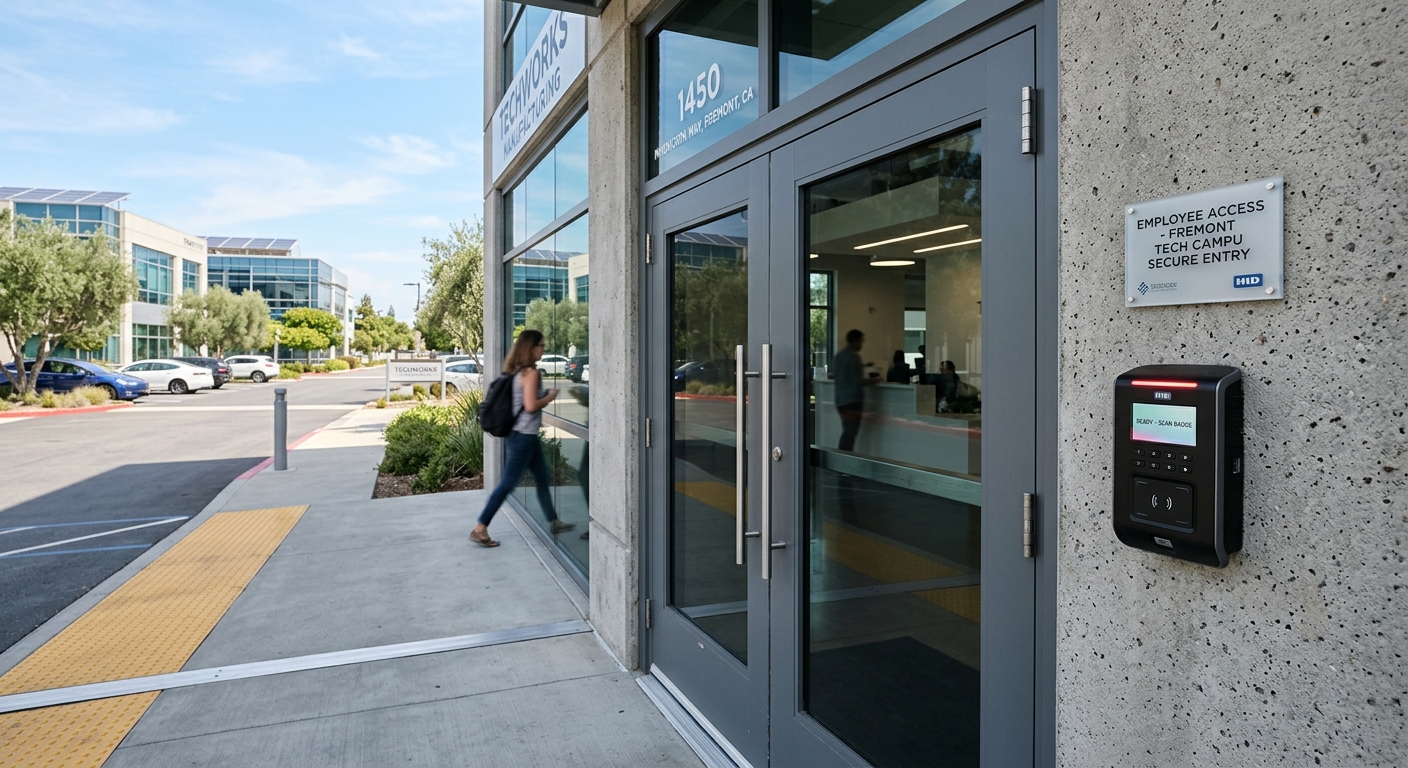
Depending on the property, this may include a door keypad system, a key card system for business, a keycard reader, a keyless fob system, mobile badge access, or setups that let authorized users unlock office with phone credentials. The right business entry system depends on the door, occupancy, code requirements, and how the space operates day to day.
These upgrades are not only for large buildings. Smaller offices and service businesses also benefit when they need better control over employee badge system permissions, visitor access, or after-hours entry.
Door condition and hardware compatibility matter
A lock cannot perform well if the opening itself is failing. Before deciding on repair or replacement, inspect the full door assembly.
Key factors include:
- Door and frame alignment
- Worn hinges or sagging doors
- Strike placement
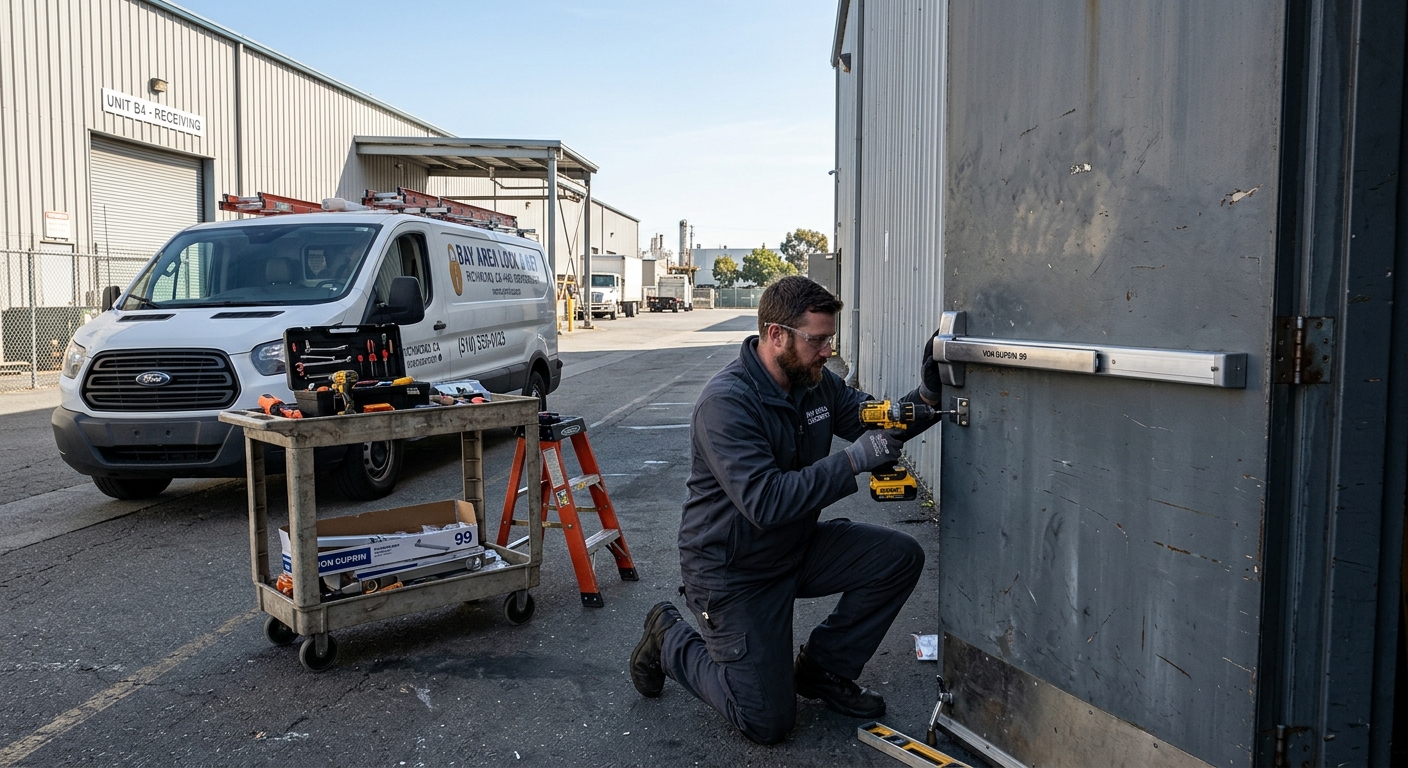
- Condition of closers, panic hardware, and levers
- Fire-rated door requirements
- Compatibility between old prep and new hardware
A lockset that looks like the problem may only be reacting to poor alignment or pressure on the latch. On the other hand, a new cylinder installed in damaged or incompatible hardware may still leave the door unreliable.
Professional installation matters because commercial openings are often more complex than they appear. Hardware has to match the door material, backset, function, traffic level, and life-safety requirements. For businesses comparing commercial lock repair versus commercial lock replacement, that evaluation is just as important as the lock itself.
A simple way to choose
Rekey if the hardware is in good condition and the main issue is controlling old keys.
Repair if the lock and related hardware are still suitable, but wear, looseness, or alignment problems are causing unreliable operation.
Replace if the lock is worn out, outdated, repeatedly failing, poorly matched to the door, or no longer fits your building's access needs.
If you are managing several doors, recurring staff changes, or expanding security expectations, step back and review the whole access plan instead of solving one lock at a time.
Commercial locksmith support for Bay Area properties
Blocksmith Pro, also known as B&B Locksmith, provides commercial locksmith services for Bay Area businesses that need practical help with commercial door locks. That includes commercial lock rekeying, commercial lock repair, commercial lock replacement, master key systems, keyless entry for office setups, and access control planning for commercial properties.
For businesses searching for a commercial locksmith in Contra Costa County or a commercial locksmith Bay Area property teams can call for on-site evaluation, the goal is straightforward: match the fix to the real problem, protect access, and keep the opening working the way it should.